

Collagen Benefits: What Do Clinical Studies Say? | Vieve

Collagen is having a moment. It’s in powders, capsules, collagen drinks and even protein water. But beyond the headlines and the glossy packaging, what do we actually know about it?
At Vieve, collagen is something we talk about a lot. We use collagen protein in our protein water and collagen powder, and we’re often asked why we chose it and whether there’s any science behind the interest.
The answer is yes: collagen has been studied in human clinical trials, including research looking at skin, exercise-related joint discomfort and nutrition. Some of the results are promising. Like most areas of nutrition science, though, the full picture is a little more nuanced than a single headline.
So, let’s take a closer look at what collagen is, what researchers have found, and how it can fit into your day.
What is collagen?

Collagen is one of the most abundant proteins in the human body. It’s found throughout our connective tissues, including our skin, bones, tendons, ligaments and cartilage.
Think of collagen as part of the body’s structural framework. It helps give different tissues their form, although it works alongside plenty of other components rather than acting alone.
There isn’t just one type of collagen, either. Different types are found in different parts of the body. For example, type I is common in skin, tendons and bones, while type II is associated with cartilage.
Our bodies make their own collagen using amino acids from the proteins we eat. Other nutrients play a role too: vitamin C, for example, contributes to normal collagen formation for the normal function of skin, bones and cartilage.
What is hydrolysed collagen?

If you’ve ever looked at a collagen powder label, you’ve probably seen the words hydrolysed collagen or collagen peptides.
Hydrolysed collagen is collagen that has been broken down into smaller chains of amino acids, known as peptides. These smaller peptides dissolve more easily in liquids, which makes them useful in powders, supplements and ready-to-drink products.
When we consume collagen, our digestive system breaks it down further. The body absorbs amino acids and some small peptides, which can then be used as needed.
One common misconception is that collagen in a drink travels directly to your skin or joints in the same form. It’s not quite that simple: the body digests and processes dietary collagen, just as it does other proteins.
Why are people interested in collagen?
Collagen sits at the crossroads of two conversations: how we get enough protein and what researchers are learning about collagen peptides.
The first is relatively straightforward. Collagen is a source of protein, and protein contributes to the growth and maintenance of muscle mass and the maintenance of normal bones.
The second is where things get interesting. Scientists have carried out clinical studies to investigate whether specific collagen supplements have effects on things such as skin hydration, elasticity and exercise-related joint discomfort.
Let’s look at some of that research.
Collagen and skin: what have clinical studies found?
Skin is one of the most researched areas when it comes to collagen supplements. That makes sense: collagen is naturally present in the skin, and researchers have been interested in whether consuming collagen peptides might influence measurable skin properties.

A 2024 study of collagen peptides and skin
A 2024 randomised, double-blind, placebo-controlled study investigated a hydrolysed collagen peptide supplement in 112 adult women.
Participants were assigned to take either 10g of a specific collagen peptide product or a placebo each day for eight weeks. Unlike some collagen supplements used in studies, the product tested did not contain additional active ingredients.
At the end of the study, researchers reported differences between the collagen and placebo groups in several measures, including skin hydration and elasticity.
What makes this study interesting is that it tested collagen peptides without additional vitamins or other active ingredients. However, it still investigated one particular formulation, in one group of participants, over a relatively short period. We can’t assume every collagen powder or collagen drink would produce the same results.
A review of 26 clinical trials
Rather than looking at just one study, researchers can also review the results of multiple trials to see whether a broader pattern emerges.
A 2023 systematic review and meta-analysis brought together 26 randomised controlled trials involving 1,721 participants. Across the studies included, the researchers found that hydrolysed collagen supplementation was associated with improvements in measured skin hydration and elasticity compared with placebo.
That’s an encouraging finding. It’s also important to remember that the individual trials used different collagen products, doses and study designs. A positive pooled result doesn’t necessarily mean that all products—or all people—will see the same effect.
Why the wider evidence is still being debated
Science moves forward by questioning and re-examining results, so it’s worth looking at research that takes a more cautious view too.
A 2025 review of randomised controlled trials examined results according to study quality and funding. The researchers found that, when they looked separately at higher-quality studies and studies without pharmaceutical-company funding, they did not find a significant benefit for the skin measures assessed.
Their conclusion was that stronger independent evidence is needed before firm conclusions can be drawn about collagen supplements and skin ageing.
What’s the takeaway? Several clinical trials have reported positive results for skin hydration and elasticity, and a 2023 review found an overall benefit across the trials it analysed. But not every review interprets the evidence in the same way, and more high-quality independent studies would help clarify the picture.
That’s a more useful answer than pretending the science is either settled or doesn’t exist.
Collagen and joints: what does the research say?
Collagen is naturally found in connective tissues, including cartilage, so researchers have also investigated collagen supplementation in relation to joints.
This is an area of particular interest for people who exercise regularly, spend a lot of time on their feet or are simply curious about maintaining an active lifestyle.
A study of active adults with knee discomfort
In a 2021 randomised controlled trial, researchers studied physically active adults aged 18 to 30 who experienced exercise-related knee pain but did not have diagnosed joint disease.
A total of 180 participants completed the 12-week trial, taking either a specific collagen peptide supplement or a placebo.
Both groups reported improvements, but the collagen group had a greater reduction in exercise-related knee pain than the placebo group. The researchers found that the difference between groups was statistically significant.
That makes it an interesting result, particularly because the trial included a placebo comparison. But it studied a specific collagen preparation in people who already experienced discomfort; it doesn’t tell us that every collagen product has the same effect, or that collagen prevents joint problems.
Another study in active people
A 2017 clinical trial also investigated activity-related knee discomfort. In that study, 139 athletic participants took either 5g of specific collagen peptides or a placebo daily for 12 weeks.
The researchers reported a statistically significant improvement in activity-related joint pain in the collagen group.
Together with the 2021 trial, this provides a reason for continued interest in collagen peptides and exercise-related discomfort. Equally, the products tested were specific formulations, and the studies don’t establish that collagen is a treatment for every type of joint pain.
If you have persistent or worsening joint pain, it’s always sensible to speak to a healthcare professional rather than trying to manage it through supplements alone.
What about collagen and osteoarthritis?
Researchers have also looked at collagen-based supplements in people with knee osteoarthritis.
A 2024 systematic review and meta-analysis brought together 11 randomised controlled trials involving 870 participants. The researchers reported that collagen-based supplements were associated with improvements in knee osteoarthritis symptoms compared with placebo.
This research is relevant to a specific medical condition and should be read in that context. The studies involved different collagen products and participant groups, and the findings don’t mean that a collagen drink or powder should be used in place of medical advice or treatment.
Is collagen a good source of protein?
Collagen provides protein, which is one reason people choose it alongside other foods and drinks in their diet.
Protein contributes to:
- The growth of muscle mass.
- The maintenance of muscle mass.
- The maintenance of normal bones.
And protein isn’t just something for people who spend hours in the gym. It’s part of a balanced diet for all of us.
That said, collagen has a different amino acid profile from proteins such as whey, eggs or soya. Collagen lacks the essential amino acid tryptophan, so it’s best enjoyed alongside a variety of other protein sources, rather than relied on as your only source of protein.
This is an important distinction. Getting enough protein overall matters, but so does getting a range of amino acids across the day.
Want to know more? We’ve explored the differences in our article on whey vs collagen.
Does collagen protein build muscle?
It’s a question we hear a lot, especially from people comparing collagen with whey protein.
The short answer is that collagen provides protein, and protein contributes to the growth and maintenance of muscle mass. But that doesn’t mean every protein source has an identical amino acid profile.
Whey contains all nine essential amino acids, while collagen lacks tryptophan. For that reason, collagen shouldn’t be your sole protein source, particularly if you’re focused on maximising muscle growth.
A varied diet can include collagen alongside foods such as fish, meat, eggs, dairy, beans, lentils, soya, nuts and seeds, depending on your preferences and dietary needs.
For a closer look at the topic, read Does Collagen Protein Build Muscle?.
Collagen powder, collagen drinks or protein water: what’s the difference?

Walk down the supplements aisle—or scroll through your favourite online shop—and you’ll find collagen in several formats. The main differences are usually convenience, taste, serving size and what else is in the product.
Collagen powder
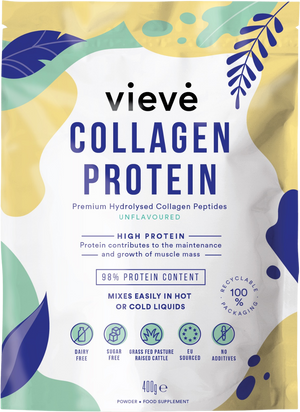
Collagen powder is generally designed to be mixed into something you already eat or drink. Depending on the product, that could be coffee, tea, a smoothie, yoghurt or porridge.
Unflavoured powders can be particularly useful if you don’t want to change the taste of your usual drink. Check the label for the collagen source and the amount of protein per serving.
Collagen drinks
Ready-to-drink collagen products come in different sizes and flavours. Some contain added vitamins or other ingredients, while others focus mainly on providing collagen protein.
Because formulations vary, it’s worth comparing the amount of collagen, the serving size and the full ingredient list.
Protein water
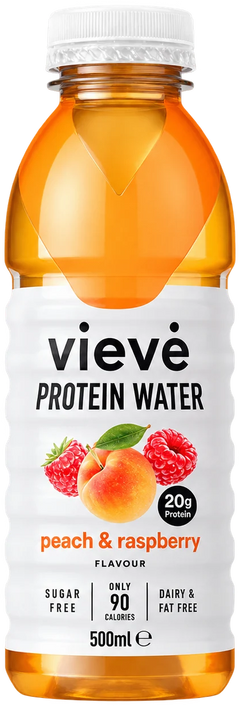
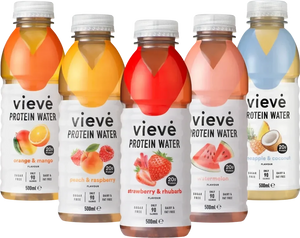
Protein water offers another format for people who prefer a lighter, fruit-flavoured drink to a creamy shake. Some protein waters use collagen; others use whey or different protein sources, so it’s worth checking the label.
We’ve covered the different formats in more detail in our guide to collagen drinks and our guide to collagen protein powder.
How much collagen was used in the studies?
There’s no single dose used across all collagen research. Different trials use different amounts depending on the product and the outcome they’re investigating.
In the studies discussed above:
- The 2024 skin study used 10g of collagen peptides daily for eight weeks.
- The 2017 study of activity-related knee discomfort used 5g daily for 12 weeks.
- Reviews bring together trials that use a range of doses and formulations.
That doesn’t mean 5g or 10g is a proven ideal amount for everyone. The dose is only one part of a study: the type of collagen, the participants, the length of the trial and what researchers measure all matter too.
When choosing a product, check how much collagen and protein it provides per serving. They aren’t always exactly the same number.
When is the best time to take collagen?
For most people, the most practical time is whenever it fits naturally into their routine.
That might be:
- Stirring collagen powder into a morning coffee.
- Adding it to a lunchtime smoothie.
- Enjoying a protein water while out and about.
- Including it alongside an afternoon snack.
You don’t need to make protein complicated. The bigger picture is your overall diet and whether you’re getting a variety of protein sources throughout the day.
Is collagen suitable for everyone?
Collagen is derived from animals, commonly cattle or fish. This means collagen itself isn’t suitable for vegetarians or vegans.
It’s also worth remembering that dairy-free doesn’t necessarily mean vegan. A collagen drink can be free from milk ingredients while still containing animal-derived collagen.
If you have an allergy, avoid a particular animal product, are pregnant or breastfeeding, or have a medical condition that affects your dietary needs, check the label and speak to an appropriate healthcare professional if you’re unsure.
Frequently asked questions about collagen
Is collagen a protein?
Yes. Collagen is a protein found naturally in the body and used as an ingredient in some powders, supplements and drinks.
What are collagen peptides?
Collagen peptides are smaller chains of amino acids produced when collagen is broken down through a process called hydrolysis. You may also see them described as hydrolysed collagen.
Is collagen good for skin?
Some clinical trials have reported improvements in skin measurements such as hydration and elasticity after participants consumed specific collagen supplements. A 2023 review found an overall positive effect across the trials it analysed, while a 2025 review raised questions about study quality and funding. More independent research is needed.
Can collagen help with joint pain?
Some clinical trials have reported improvements in joint discomfort in people taking particular collagen supplements. Those findings are interesting, but they don’t establish that every collagen product has the same effect. Persistent joint pain should be discussed with a healthcare professional.
Is collagen the same as whey?
No. Collagen and whey are different proteins. Whey comes from milk, while collagen is derived from animal connective tissues. They also have different amino acid profiles.
Are collagen drinks vegetarian?
No. Collagen is animal-derived, so a drink containing collagen is not vegetarian or vegan, even if it’s dairy-free.
Can I take collagen every day?
Many people choose to include collagen products regularly as part of their diet. Follow the product’s serving guidance and make sure you’re also eating a varied range of foods and protein sources.
The final word on collagen
Collagen is a protein with an interesting and growing body of clinical research behind it.
Studies have explored everything from skin hydration and elasticity to exercise-related joint discomfort. Some results are encouraging, while other researchers have called for more rigorous, independent trials before drawing firm conclusions.
The important thing is to look at what each study actually tested, rather than assuming all collagen products are the same. And when it comes to your own diet, collagen is one of many ways to add protein to your routine—alongside a varied mix of other protein-rich foods.
Because getting more protein into your day shouldn’t need to feel like another job.
Looking for an easy way to add protein to your routine? Discover our unflavoured collagen protein powder, made with hydrolysed collagen peptides and designed to mix into hot or cold drinks.
References
- Demir-Dora et al. (2024). Hydrolysed collagen peptides and skin health in adult women: a randomised, placebo-controlled study.
- Effects of Oral Collagen for Skin Anti-Aging: A Systematic Review and Meta-Analysis (2023).
- Effects of Collagen Supplements on Skin Aging: A Systematic Review and Meta-Analysis of Randomized Controlled Trials (2025).
- The Influence of Specific Bioactive Collagen Peptides on Knee Joint Discomfort in Young Physically Active Adults: A Randomized Controlled Trial (2021).
- Improvement of activity-related knee joint discomfort following supplementation of specific collagen peptides (2017).
- Effect of collagen supplementation on knee osteoarthritis: an updated systematic review and meta-analysis of randomised controlled trials (2024).
